The Problem with Selective Sovereignty
A Māori philosophy of mana and responsibility


“Don’t be afraid to challenge someone trying to assert authority over you. Just because someone has authority does not mean they have more mana. If someone is asserting their authority they have to let go of respect and understanding to get their way and you are no longer equal” — Tame Iti

A while ago I had a racist landlord. He was never racist to my face, rather, he would be racist about me and Māori in general when we weren't looking. It was only after his property management assistant who also used to be his close friend told me how he'd act that I found this out. She told me how he came up with racist nicknames for me. She spoke of how he'd complain when people, myself included, speak te reo Māori, and he would also say Māori women's moko (cultural facial tattoos) “look like barcodes”.
The racism was disgusting, but also there was something other than the racism that baffled me about this guy. See, despite being a bit of a swearer himself, he had a massive problem with me swearing. Always telling me off when doing so around him.
This baffled me because he occupies my land, and hates my language, but also didn't allow me to speak the full contours of English? It quickly became clear to me that though I was forced to speak it around him I was not allowed to truly “occupy” English. I became a tenant of his language and a vagabond of my own.
I ignored his warnings and kept swearing around him. My swears were sending a message: “If you have authority over language then fine, your authority has to own all of English, including the words you don't like. You wanted English? Congratulations fuck face. Here’s English. You get the responsibility of your own culture's “trash” and either you sit with it, or you clean it by kicking me out, but I have forced it into your responsibility and that is uncomfortable to you”.
He didn't really have tenants to replace me, so he opted for the former and just sat with it. I challenged his mana, and doing so meant he either had to contend with the cost of the responsibility or realise he does not have the authority he thought he did.
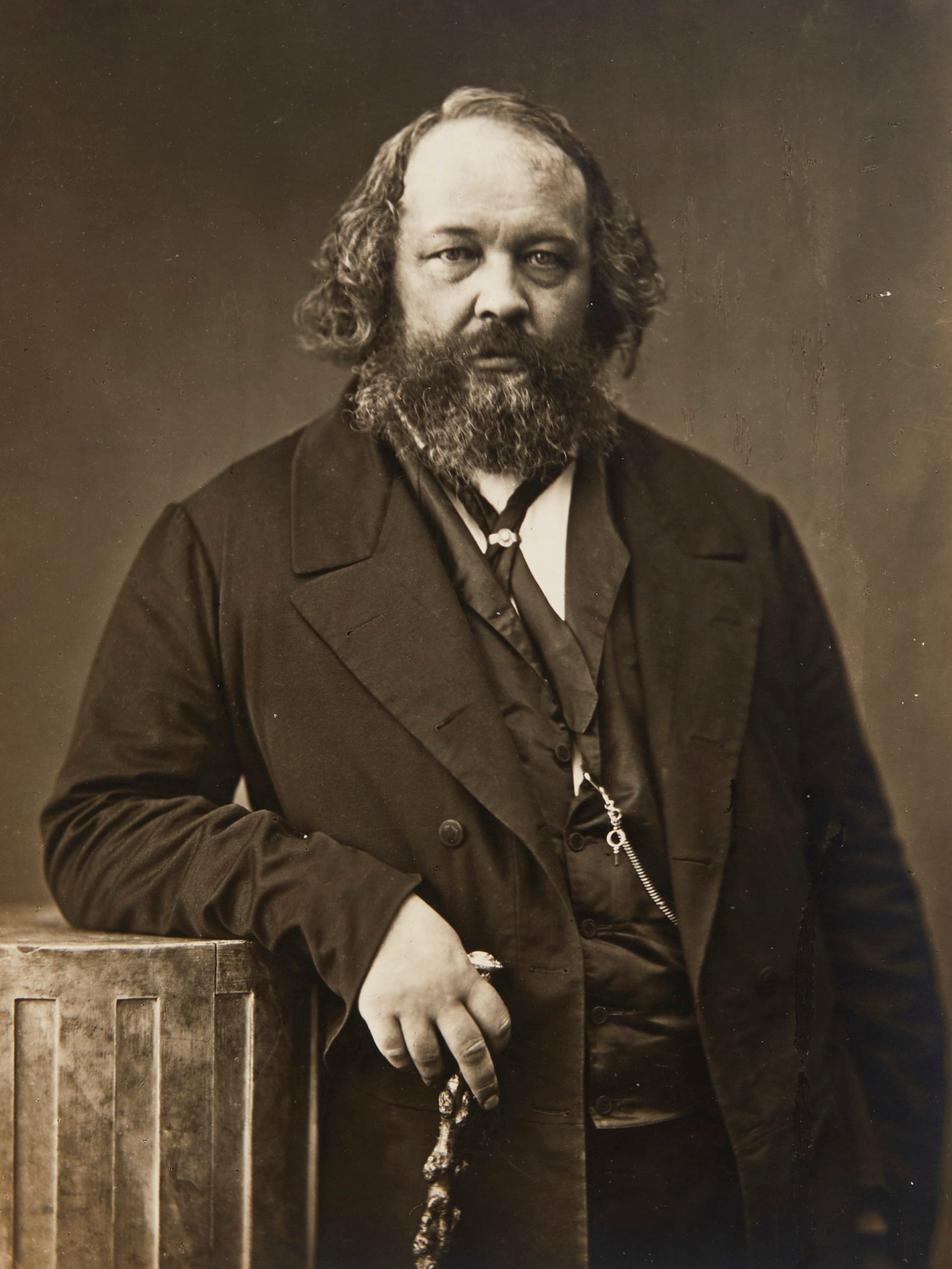
I used to be an anarchist before my training in tikanga. I still have the utmost love and respect for anarchism, and still follow many of its principles. It was not that it was wrong per se, but I guess to me it seemed incomplete...? Though I consider myself a Marxist nowadays, Marxism didn't really seem to fill that hole either, learning mana did.
Though my favourite anarchists were (and still are) Kropotkin and Malatesta, it was a line from Bakunin that stuck out to me the most.
“Does it follow that I reject all authority? Far from me such a thought. In the matter of boots, I refer to the authority of the bootmaker; concerning houses, canals, or railroads, I consult that of the architect or the engineer. For such or such special knowledge I apply to such or such a savant. But I allow neither the bootmaker nor the architect nor savant to impose his authority upon me.”
People believe that he talks about expertise not being the same as domination. I approached it a bit deeper than that. To me, through the framework of mana, the boot maker is an authority that is subordinate to the boot. Had he become an authority outside of the boot, like my landlord with English, then that authority when challenged begins to tear.
Western beliefs often get trapped in legitimising the opposition. Whether one loves the king or hates the king, the king remains the centre of the story. A type of Hegelian master/slave dialectic. Through this, they get trapped into a relationship with the dominant class, whereas challenge as a test of mana is different because it’s trying to discover whether there is a relationship worth legitimising.
In the case of responsibility I defer to the authority. I defer so much to the authority, that if it is dishonest, it begins to rip under its own weight. If the boots fail before proper usage it was because that was the responsibility of the bootmaker. Through mana, authority becomes subordinate to itself rather than being self referential. It is not something you can assert, and if you try your mana is challenged. When you respect mana you learn that you are a leader precisely because you are a follower. One is a rangatira (chief) precisely because they are capable of being led by their hapū (subtribe).
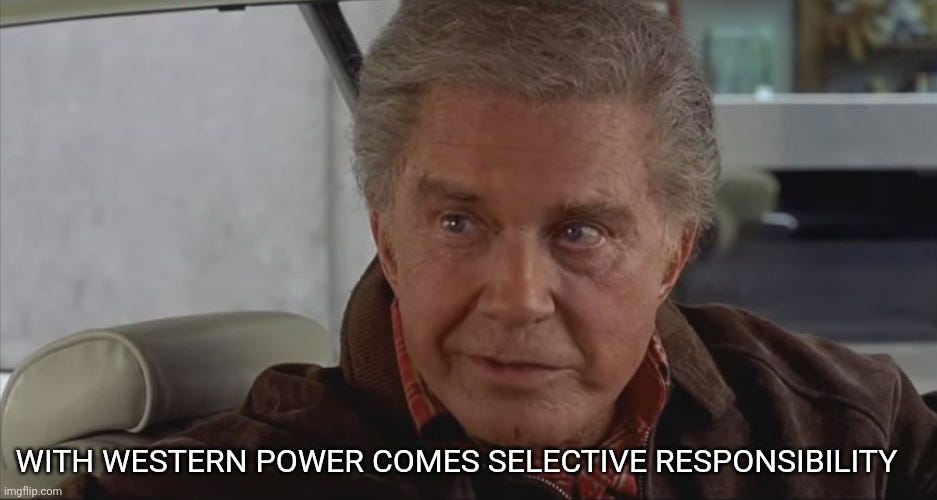
Settlers, like my previous landlord, wanted selective sovereignty. It's the same reason white people will praise European conquest and yet downplay their part in slavery and genocide. To challenge mana is to challenge such illegitimate sovereignty. A rangatira with mana is just as responsible for their horrible actions and the horrible actions of the hapū as their helpful actions, and they know it, mana makes sure they know it. By contrast, authority in western colonial frameworks become self referential “I have authority because I possess authority”.
Challenging ones mana is not to say “you do not get to take my land” in a vacuum. After all, even before colonisation we still occasionally had other iwi invading one another. Rather, it's to say after conquest: “You want my land, okay. That impoverished region? They aren't people who made poor choices, that's entirely on you. Your exclusive sovereignty comes with the side effect of exclusive responsibility”. So, when we fight for landback we acknowledge that we take on all the responsibilities that come with it.

Challenging mana exposes the dishonesty of the settlers. Hongi Hika attempted to invade my iwi (tribe) during the musket wars and yet had 1000x more mana than James Cook would ever have. The coloniser wants the rights of conquest without the duties of conquest. Hongi Hika by contrast had invaded many iwi and yet refused to declare himself Māori king when settlers requested him to do so. He, and many other rangatira realised “If you grab their land, then you must also hold the boulder”.
Even if I were to oppose Hongi Hika today for attempting to invade my iwi during the musket wars, I would only oppose him because of his mana. Precisely because he is a legitimate opposition. He was a rangatira, and a war leader. Mana meant he was subordinate to those very titles and could never become a superordinate authority. Declaring himself king would mean he would attempt to transcend his obligations, and doing so would mean his hapū would never listen to anything he has to say because he becomes superordinate to his actions. Likewise, challenging my landlord was not opposing him, but testing his mana to see if he was even worth opposing in the first place.
As I often do, I researched the etymology of “authority”.
Authority comes from the Latin auctōritās which translates to the quality of being an originator. An originator of boots, of language, of conquest, and of writing.
Like the bootmaker and their boot, I am the originator of this article. The author/ity. The only way I can be truly and honestly responsible for my writing is to be subservient to it. Not subservient to the text as an object, but subservient to my own writing as an origin. Because of this, I do not get the right to stand out of it. If I do, I become illegitimate. Doing so means I become a superordinate authority and when challenged, it will show that my mana will begin to tear.
Thanks heaps to Anarcasper (M) and Bronwyn Cymry for suggesting this topic! I've been meaning to write about it for a while and never fully got around to it till now!
Thanks for reading! If you enjoyed my article please like and share and leave a comment telling me your thoughts.
If you have any good faith critiques or disagreements I would love to hear them too!
Ngā mihi.
 | A guest post by
|
There is so much depth to this piece. Layers upon layers of meaning and insight. I'm going to have to read through it many times in order to come to grips with the whole thing.
Note: I use the pronouns "he", "his" and "him" in a non-gendered way, as one would use the pronoun "ia" in te reo.
The weakness of Bakunin's argument is that he does not recognise a socially determined authority. We might get to know who is a good bootmaker, architect or engineer after buying a pair of boots, having a house designed, or a bridge constructed. But that would be an approach fraught with risk. Normally we check to see if the bootmaker has completed an apprenticeship, the architect has a degree, or the engineer is a member of a professional association. This is the social dimension of authority. It is not foolproof, but it is absolutely necessary.
I suggest that the question "Where does the social dimension of authority come from in the European system vs rangatiratanga?" is the preeminent question for all political discourse in Aotearoa. It is the question which when properly answered will show us our best way forward as a people.
You write "One is a rangatira .. precisely because they are capable of being led by their hapū".
I would word it differently. I would say that the rangatira is responsible to his hapu. Responsibility is a concept that you rightly associate with authority. Genuine authority and genuine responsibility are inseparable. The key to responsibility is that you must know to whom you are responsible, and you must have a mechanism for responsibility.
The rangatira is responsible to his hapu in two ways. First, he must be "capable of" listening to his whanau. That does not just imply a willingness. It demands a means by which he can listen. The means by which a rangatira listens are both informal (the aunties drop by and have a chat) and formal (an issue is thrashed out on the marae by the whole hapu in the presence of the rangatira). For either of these means to apply, everyone must know who is in the hapu and who is not.
I make this last point because when you think about it, under the European system, a Prime Minister, Member of Parliament etc has no idea who his supporters (those who voted for him) actually are. So he comes up with the fiction that he represents the whole country in the case of a Prime Minister, or an entire constituency in the case of a Member of Parliament. But this fiction takes us nowhere, because there is no means by which the PM or MP can be responsible to the people who he supposedly represents. There is no equivalent to the hui a hapu on the marae. Sure, there are elections every three or four years, but nothing equivalent to the organic, natural means by which a rangatira listens to his people and acts in keeping with their will.
So why does a rangatira act in keeping with the will of the hapu? Well, you could say because he is himself one of them, one of the hapu, and that is another important point of difference with the European system, but there is something more than that, which is a little recognized feature of rangatiratanga: there is a means for transfer of authority to be employed when and if the rangatira ceases to act in keeping with the will of the hapu.
This is where authority comes in. What is the source of authority in rangatiratanga? To put it another way, what is the measure of the mana of the rangatira? (Here I am not considering mana tuku iho which is a different concept altogether). The mana of the rangatira derives from the number and the mana of his followers and his authority is strictly a product of the number and the mana of those who choose to follow him. They give him authority and that is the only authority he has. They can also take back what they have given. That is the means by which the rangatira is objectively responsible to his hapu, and it is such a powerful instrument that it very rarely needs to be used. The knowledge that it can be used at any point is enough to have the desired effect.
There is another aspect to responsible government. As you say "A rangatira with mana is just as responsible for their horrible actions and the horrible actions of the hapū as their helpful actions". That is hugely important. It means that when rangatiratanga is fully and properly implemented law and order is maintained at the hapu level to the benefit of all, rather than through the oppressive apparatus of the state. The rangatira is responsible to and for his hapu.
Now compare that with the European system. An MP or PM is elected for a fixed term. During that term he is a law unto himself. He can do whatever he likes. Collectively the Members of Parliament could, in theory, and as occasionally happens in practice, arbitrarily extend their term in government to five or ten years or - just think of a number. They could set about trying to blow up the world, and constitutionally there is nothing anyone could do about it. As you put it "authority in western colonial frameworks become self referential “I have authority because I possess authority”. When a man like Donald Trump comes along we see in stark outline the irresponsibility of western systems of government.
On the other hand, when you think about rangatiratanga, you cannot help but see that at every point and in every way it is superior to the European system. It makes leaders responsible. Therefore I would not just say "We can return to rangatiratanga". I say "We must return to rangatiratanga if we are to survive as a nation".